What are service species?
Translated from Portuguese. Original published by PRETATERRA.
Service species, as the name suggests, are those that, besides their flowers and fruits, provide other benefits to the plants and crops in an agroforestry system. So when we plan an agroforestry system, we think beyond species with an economic return (fruit, nuts, timber, etc.). We need to include species that will be part of this ecological system, taking on other roles such as producing biomass to cover the soil and cycling nutrients, among others.
 Root system of a pigeon pea plant in the PASTO VIVO Project.
How do we choose service species?
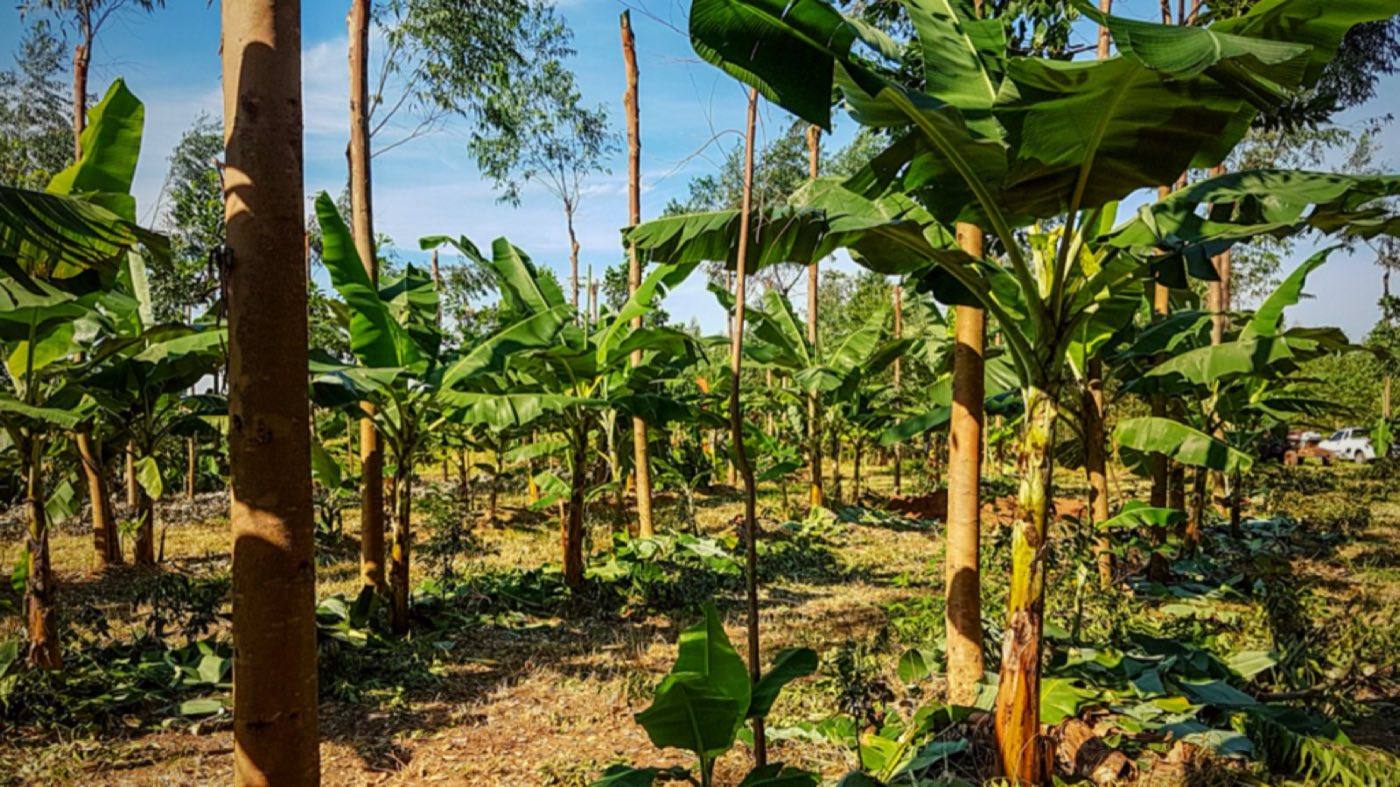
We usually consider a few main factors when choosing species, such as their ecological succession category, whether they are native to the biome, their growth rate… A key service species in agroforestry is the banana plant, which, besides producing biomass to mulch around seedlings, produces fruit that provides income in the first years. We also really like using pigeon pea, which, as a legume, fixes nitrogen in the soil, cycles nutrients and grows fast, also providing biomass.
Softwood trees, that is, trees with no timber potential, can also be used as service species, such as capixingui, inga and guapuruvu. Even Brazilian pepper (pink peppercorn) can be a service species, as long as it is managed frequently, as we are doing in the Timburi Project.
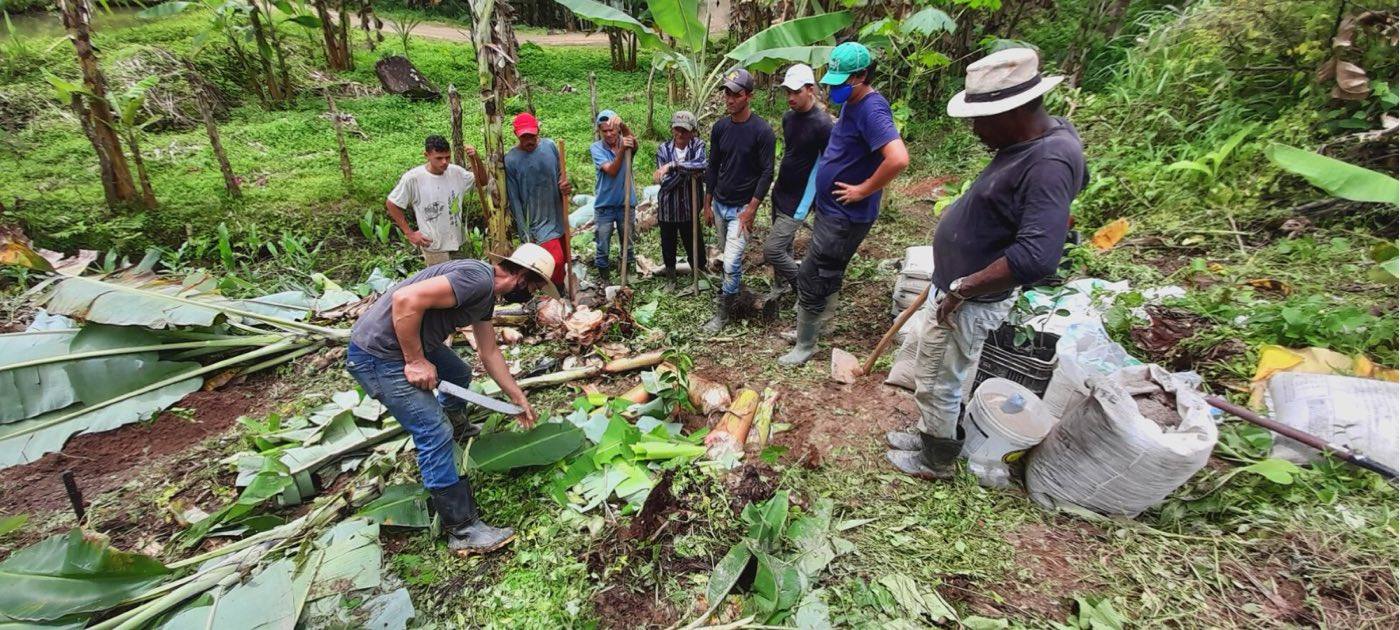 Our team planting our project in Vale da Pelada, Alagoas.
Many services
Besides biomass, service species bring other advantages when included in production systems. We call dual-purpose service species those that, besides biomass, also give us another product, such as the banana plant and the Brazilian pepper tree. But the truth is that these species provide many other benefits:
- they can create a more suitable microclimate for later-stage species to develop;
- they attract pollinators, which benefits the main crop;
- they cycle nutrients in the soil;
- they prevent erosion;
- they increase the soil's water-holding capacity;
- they can attract pests, easing attacks on commercial crops;
- they help loosen compacted soil.
In practice
During one of our in-person agroforestry coffee courses, we recorded this video about service species, which complements the text you just read:
And if you want to understand how an agroforest is planned, what its principles are and how to choose the species of an agroforestry system, including service species, Pioneer is for you! It is the first course in our agroforestry program. Learn more here.