PRETATERRA answers: What is the role of pink pepper in Timburi?
Translated from Portuguese. Original published by PRETATERRA.
If you follow our Instagram account, you've seen that we've been posting a lot about what we're doing in the Timburi Project. We posted a video explaining the planting of one of the systems implemented there, and Alexandra Nogueira asked the following question:
"Are the lines of pepper and then avocado to protect the coffee plantation? Sorry to ask, because I don't understand. We have coffee on my mother's farm and pink pepper here in the region is a native plant. The farm is in the region of Linhares-ES. It is between Linhares and Pontal do Ipiranga."
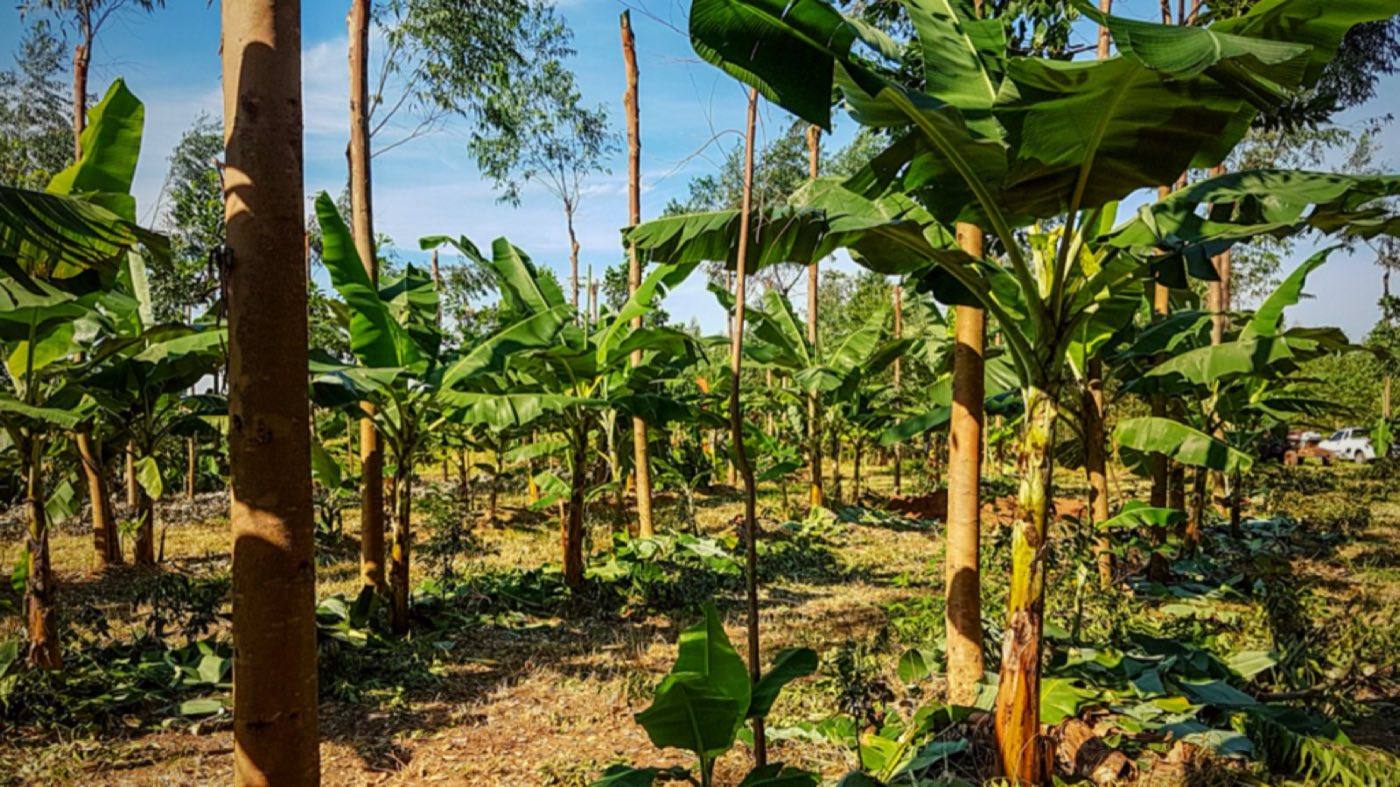
Alexandra, thanks for following us! Your question refers to SAF Frutas, which is an agroforestry system that we developed for the Timburi Project and which focuses on avocado production. In this system we do not have coffee, but lines of tree species (medium and long cycle timber and avocado), interspersed with lines of service species. We explain a little about this system here.
Why did we include the pepper tree in the system?
Speaking specifically about SAF Frutas, pepper trees were included as dual-purpose service species, that is, their purpose within the system, in addition to nutrient cycling, biomass production and attracting pollinators and dispersers, is the production of pink pepper. We included this species here because we mapped great regional potential for this crop.
Can Brazilian pepper trees grow alongside coffee in agroforestry?
The region of Linhares, ES, is privileged, home to lush Atlantic Forest in the tabuleiro and mussununga forests. In addition to the region being suitable for coffee, a large share of Brazil’s pink pepper production is also concentrated there. Including the pepper tree in agroforestry systems with coffee makes perfect sense, as long as it is placed appropriately within the system’s spatial and growth plan. As it is a medium-sized and fast-growing tree, management must be carried out periodically. And the presence of slower-growing and larger trees along with pepper trees will protect the coffee by creating a microclimate, making its system more resilient in the face of climate change.