From concrete to countryside: Neo-ruralism, a sign to rethink big-city life
Translated from Portuguese. Original published by PRETATERRA.
In this article, we discuss how and why the growing number of neo-rurals may point to a less centralized future, substantially different from the present.
Who are the neo-rurals?
Just as there was a phenomenon of intense centralization and migration from the countryside to the city during the First Industrial Revolution, today we see the opposite movement: many people are leaving big cities to live in rural areas, a trend known as neo-ruralism. According to Azevedo, neo-rurals are:
"a new class of people who were born in cities but choose to live in the countryside, seeking the best of both worlds. They want a greater connection with nature and a better quality of life" (AZEVEDO, 2010, p. 82).
These people generally engage in sustainable activities such as ecovillages, ecotourism, permaculture, agroforestry, agroecology and organic farming.
There are five main neo-rural profiles. The infographic below highlights them:
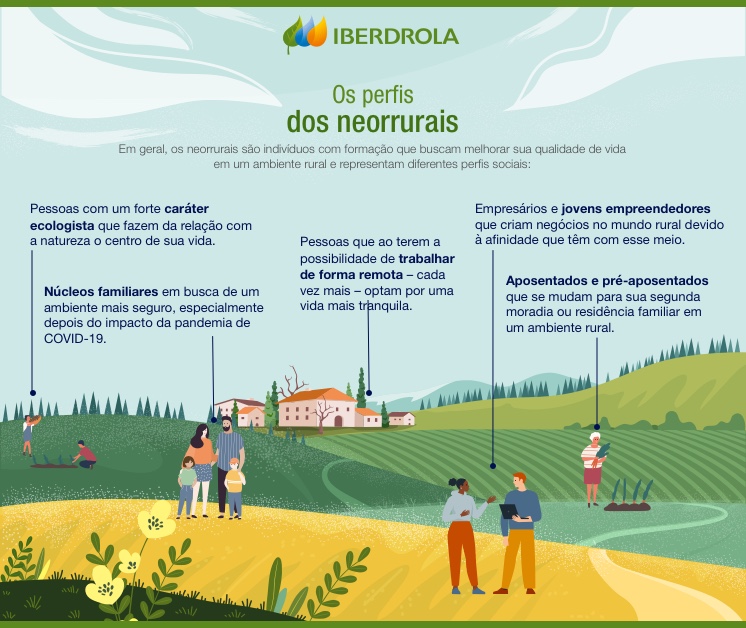
The founders of PRETATERRA, Valter Ziantoni and Paula Costa, are real examples of neo-rurals. They left the city and now live on a permaculture farm in Timburi, São Paulo, which is also the company's headquarters. The couple values contact with nature and ancestral living, and works so that other people can experience it too.
Another example is Anderson Arcanjoleto and Angélica Facirolli, who left urban life to grow agroforests on a small farm in Patrocínio Paulista, São Paulo. To get to know them better, watch the video below:
Why is this movement gaining strength?
Neo-ruralism has its roots in the 19th-century Romantic movement in France, but it gained momentum in the 1960s in the United States and Europe.
Although its meaning has broadened, the phenomenon is driven by several factors. Life in big cities is becoming increasingly stressful, chaotic and anxious, made especially worse by the COVID-19 pandemic, which showed how much more prone cities are to spreading disease. Social distancing also highlighted the need for human connection. This period of reflection led many people to reassess their lifestyles and realize that city life can be unfulfilling and harmful to their health.
In addition, remote-work technology, boosted by the pandemic, made neo-ruralism even more feasible, allowing people to settle in more natural surroundings without compromising their careers.
What are neo-rurals looking for?
Neo-rurals seek quality of life in the countryside, something often missing from cities and the urban way of life. They also value contact with nature and look for sustainable ways of producing food. Many also seek a stronger connection with community, which can be found in ecovillages and similar projects.
Demand for agroecological projects, for example, has grown enormously, especially after the pandemic.
Will the future be different?
Neo-ruralism points to a significant trend suggesting that city life is far from natural. Cities promote a lifestyle increasingly removed from the simplicity of the past, with information overload, pollution, anxiety, social isolation, consumerism and complexity, making it an unsustainable way of life. While cities promote a lifestyle disconnected from our roots, leading to problems such as the climate crisis, pollution and health issues, neo-ruralism points to the need to return to a more sustainable way of life in harmony with nature. Beyond that, when we try to defy the nature of things, we are confronted with negative effects such as the climate crisis, floods, erosion and poor diets.
That is why many see life close to nature and connected to our origins as a more desirable option, something almost impossible to achieve in the urban rush. As this movement gains strength, the future may indeed be a completely different place from what we see today: decentralized, connected and calm. Something fully in line with our human essence, and people, fortunately, are more aware of it every day.
If you want to go deeper into the subject, see this video.
And if you are looking for land, we recommend our partner platform RELAND. They list thousands of rural properties across Brazil. You can visit them at https://reland.com.br/.