Pichanaki: Agroforestry in Peru’s upper Amazon
Translated from Portuguese. Original published by PRETATERRA.
Agroforestry systems offer an integrated response to climate and economic challenges in the Upper Amazon.
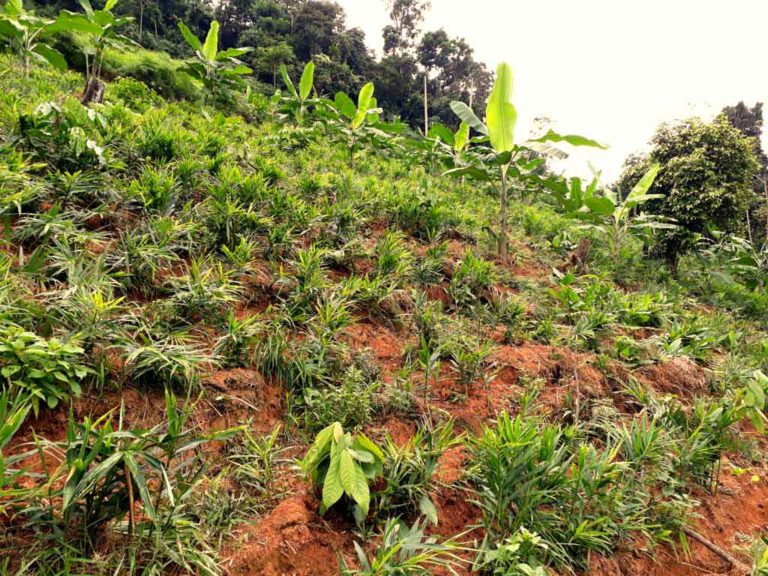
The Selva Alta is the ecotone where the Amazon rainforest climbs the Andean slopes, bringing biodiversity to the mountainside. In this impressive natural setting, there are farmers who, for hundreds of years, have been producing crops on 45-degree slopes, using slash and burn as an agricultural method. Rapid population growth, worsening climate change and soil degradation threaten the prosperity of local production.
LaGrama produces, promotes and exports turmeric and ginger in an organic system in this Peruvian jungle setting – they are the largest local employers and buyers, offering price premiums to partner farmers who commit to improving the production system and meeting the standards of the various certifications they hold.
Despite already being organic (and biodynamic) certified in several countries, LaGrama was not satisfied with a system that merely replaced conventional inputs without restoring the productive landscape. True to the motto “Organic is not enough”, LaGrama sought to design a regenerative agroforestry system that could serve as a model, not only for its own outgrowers, but for all farmers in the area. PRETATERRA took on this challenge, designing, teaching and implementing a new production model for Selva Alta.
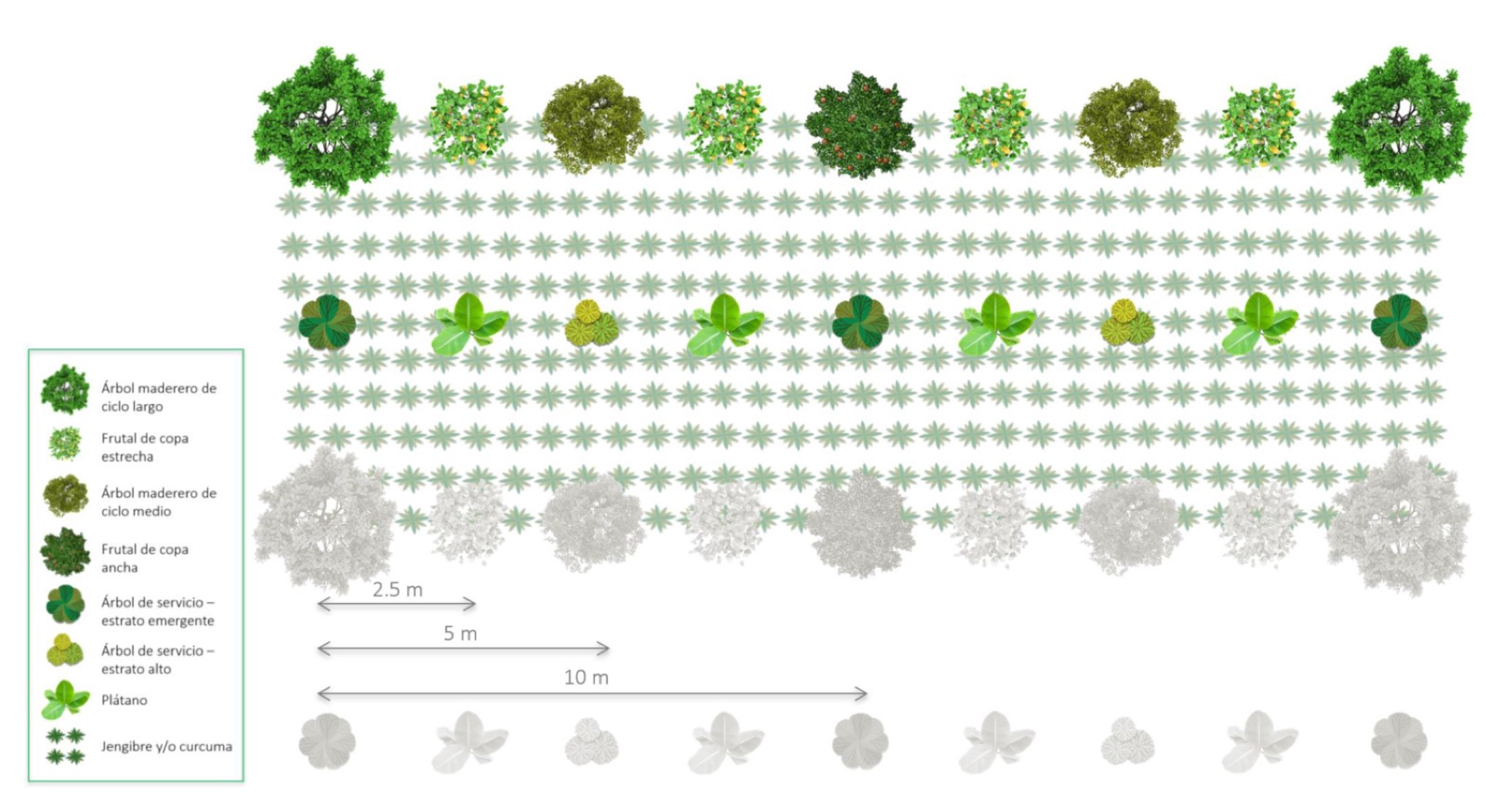
We build on local farming practices, introducing a forest layer composed of long-cycle timber and fruit trees, interspersed with service lines (biomass production and erosion control), informed by participatory assessments with rural communities in the region.
In addition to the joint implementation of the pilot module, the training of local farmers took place with planting demonstrations in a joint effort and and explanations of how the system works. Species once considered unwanted, such as pino chuncho (Schizolobium parahyba var. amazonicum) and the yungor (Cecropia sp.) took on new roles as service species: stabilizing soil on slopes, fixing nitrogen and mobilizing phosphorus.
The intensification of climate change is felt, firstly, by people dependent on the forest – followed by loss of fertility, degradation and migration. With the new agroforestry ginger production model, we hope to reduce the negative impacts of climate change, increasing production and economic gains. Intelligent productive diversification strategies in line with the demands of more demanding and environmentally conscious markets, create pioneering scenarios for the development of integrated agroforestry solutions.
PRETATERRA innovates in the conception of systematic, locally adapted and replicable designs, which meet specific demands and generate lasting and effective solutions.
We produced a documentary series on our YouTube channel telling a little about the agroforestry implementation of the Pichanaki design.